Carbon Processing for Gold Recovery in Zimbabwe
Your activated carbon is one of the most important and most expensive consumables in your gold recovery circuit. Keeping it in good condition directly affects how much gold you recover. We assess, acid-wash, and advise on carbon management.
The Role of Activated Carbon in Gold Recovery
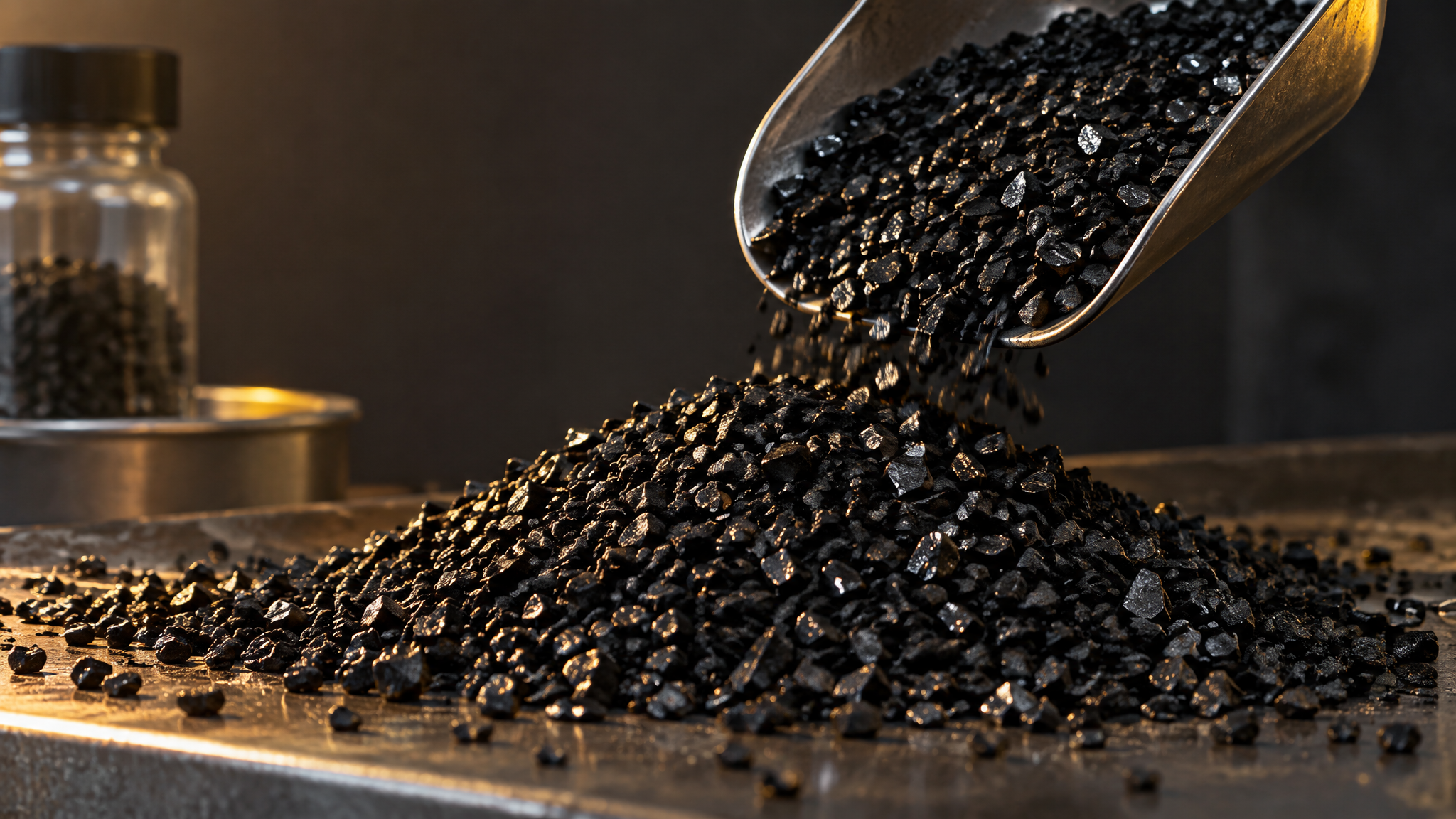
Activated carbon is the workhorse of modern gold recovery. In CIP and CIL circuits, granular activated carbon is mixed with cyanide leach solution. The carbon particles adsorb dissolved gold from the solution, concentrating it from a dilute liquid onto a solid that can be physically separated and processed.
Good carbon has a massive internal surface area, often exceeding 1,000 square metres per gram. This huge surface area, full of microscopic pores, is what gives carbon its ability to grab gold from solution. When those pores get blocked by contaminants, the carbon loses its effectiveness.
The relationship between carbon quality and elution performance is direct. Clean, well-maintained carbon adsorbs gold quickly and releases it readily during elution. Fouled or degraded carbon adsorbs slowly and strips poorly, which means lower gold recovery and wasted time.
How Carbon Quality Affects Elution Efficiency
When carbon arrives at our facility for elution, the first thing we do is assess its condition. This is not a formality. The state of your carbon determines how we set up the elution run and what results you can expect.
Fresh, well-maintained carbon with a high gold loading will typically strip cleanly in a single cycle, giving you recovery rates above 97%. Carbon that has been through dozens of cycles without acid washing or regeneration might strip at 90% or less, leaving significant gold behind.
Common problems we see with carbon arriving for elution include:
- Calcium carbonate fouling from hard water in the leach circuit
- Organic compound contamination from flotation reagents or oils
- Fine carbon particles from physical degradation
- Silica and clay buildup from dirty slurry
An acid wash before elution removes many of these contaminants and improves stripping efficiency. We perform acid washing as a standard pre-treatment step, and adjust the wash intensity based on the level of fouling we find during carbon assessment.
The Acid Washing Process
Acid washing uses dilute hydrochloric acid (typically 3% to 5% HCl) to dissolve inorganic foulants from the carbon surface. Calcium carbonate, iron oxides, and other mineral deposits break down in acid, freeing up the pores that were blocked.
The process is straightforward. Carbon is loaded into a column and hot acid solution is circulated through the bed for several hours. The acid dissolves the foulants, and the spent acid is drained and neutralised. The carbon is then rinsed with clean water before moving to elution.
Acid washing does not remove organic foulants. For organic contamination, thermal regeneration in a kiln at 650 to 750 degrees Celsius is needed. The heat burns off organic compounds and reactivates the carbon pores. This is typically done at a dedicated regeneration facility.
We recommend acid washing every 3 to 5 elution cycles for most operations. If your water is particularly hard or your circuit has high levels of contaminants, more frequent washing may be needed. We can advise based on the condition of the carbon we see coming through our facility.
Extending Carbon Life
Activated carbon is expensive. Replacing it too early wastes money. Running it too long costs you gold. The goal is to find the right balance.
Tips to extend the useful life of your carbon:
- Acid wash regularly to prevent buildup of inorganic foulants
- Regenerate in a kiln after every 3 to 5 elution cycles to remove organics
- Screen out fines regularly to maintain good particle size distribution
- Avoid mixing carbon of different ages and conditions in the same batch
- Monitor your water quality and treat it before it enters the leach circuit
When carbon activity drops below 70% of its original capacity even after regeneration, it is usually time to replace it. We can test your carbon and give you an honest recommendation.
Carbon Processing FAQ
Need Carbon Assessment?
Bring your carbon in and we will tell you exactly what condition it is in and how to get the best recovery from it.
Request a Quote