The Hidden Cost of Bad Water
At first glance, water might seem like the simplest ingredient in a gold elution plant. But if you have ever struggled with inconsistent results, long elution times, or dull electrowinning plates, chances are the water quality is a factor.
Water is used to make up strip solutions, rinse carbon after acid washing, dilute reagents, and clean equipment. If that water carries dissolved minerals, organic compounds, or other contaminants, every part of the process is affected. The problems compound over time as contaminants build up in the circuit.
This guide breaks down what water quality issues look like in an elution plant, what to test for, and how to fix the most common problems.
Total Dissolved Solids (TDS)
TDS measures the total concentration of dissolved minerals in your water, expressed in milligrams per litre (mg/L) or parts per million (ppm). It includes everything: calcium, magnesium, sodium, potassium, bicarbonates, chlorides, sulphates, and silica.
For gold elution, lower TDS is always better. Here is a rough guideline:
- Below 50 mg/L: Excellent. Suitable for AARL systems without further treatment.
- 50 to 200 mg/L: Acceptable for ZADRA. AARL may need polishing.
- 200 to 500 mg/L: Problematic. Expect carbon fouling and reduced stripping efficiency.
- Above 500 mg/L: Unsuitable. Must be treated before use in elution.
High-TDS water introduces ions that compete with gold on the carbon surface, block pores with mineral deposits, and interfere with the chemistry of the strip solution. Over time, the buildup accelerates and the problems get worse.
Water Hardness: Calcium and Magnesium
Water hardness, primarily caused by dissolved calcium and magnesium, is the single biggest water-related problem in gold elution plants in Zimbabwe. Many operations draw water from boreholes or surface sources in areas with limestone or dolomite geology, resulting in hard water that wreaks havoc on carbon.
When hard water is used to make strip solutions or rinse carbon, calcium carbonate (CaCO3) precipitates on the carbon surface. This is the white, chalky deposit you sometimes see on used carbon. It blocks pores, reduces adsorption capacity, and slows down desorption during elution.
How hard is too hard?
- Below 50 mg/L CaCO3: Good. Minimal impact on elution.
- 50 to 150 mg/L CaCO3: Moderate. Acid wash more frequently.
- Above 150 mg/L CaCO3: Treat the water or expect significant efficiency losses.
Fixes:
- Water softening (ion exchange) removes calcium and magnesium effectively
- Reverse osmosis removes hardness along with other dissolved solids
- Acid wash carbon more frequently to remove CaCO3 buildup
- At minimum, test your water hardness and track it over seasons (borehole water quality can change)
pH
Water pH affects both the strip solution chemistry and the behaviour of dissolved minerals. Most natural water sources have a pH between 6.5 and 8.5, which is generally acceptable. But acidic water (below 6) or highly alkaline water (above 9) can cause problems.
Acidic water dissolves more metals from rock and soil, increasing TDS. It can also corrode equipment, releasing iron and copper into the circuit. Highly alkaline water tends to precipitate calcium carbonate faster.
Target a pH between 7.0 and 8.0 for water used in elution. Adjust with dilute acid or alkali if needed, though addressing the underlying water source is usually a better long-term fix.
Chlorides
Chlorides in water are a double problem. First, they are corrosive to stainless steel and mild steel equipment, causing pitting and accelerated wear on pipes, valves, and column fittings. Second, chloride ions can interfere with cyanide chemistry, potentially forming cyanogen chloride (CNCl), which is toxic and reduces the effectiveness of the strip solution.
Keep chlorides below 100 mg/L in elution water. If your borehole or river water has higher chloride levels, reverse osmosis is the most effective treatment. Blending with a low-chloride water source is an alternative.
Organics and Biological Contamination
Surface water sources (rivers, dams) often carry organic compounds and biological matter. These organics adsorb onto carbon, competing with gold for surface sites and gradually poisoning the carbon. Some organics, particularly humic and fulvic acids, are very strongly adsorbed and resistant to acid washing, requiring thermal regeneration to remove.
Signs of organic contamination include carbon that develops a brown or tea-coloured leachate when soaked in clean water, unexpectedly low gold adsorption rates in the CIP circuit, and carbon that strips poorly even after acid washing.
Fixes:
- Use borehole water instead of surface water where possible
- If using surface water, install activated carbon filters to remove organics before the water enters the process
- Thermally regenerate carbon more frequently to burn off organic foulants
- Test for dissolved organic carbon (DOC) in your water source
Silica
Dissolved and colloidal silica in water deposits on carbon surfaces as a glassy, hard coating that is very difficult to remove. Unlike calcium carbonate, silica deposits are not soluble in hydrochloric acid and may not fully burn off during thermal regeneration.
High-silica water (above 20 mg/L dissolved silica) should be treated with reverse osmosis or specific silica removal media before use in elution circuits.
AARL vs ZADRA: Different Water Sensitivities
AARL systems are significantly more sensitive to water quality than ZADRA. The AARL process relies on deionised or demineralised water for the final elution step. This high-purity water creates the chemical driving force that strips gold from carbon at high temperatures. If the water contains dissolved minerals, those minerals compete with the desorption process and reduce efficiency.
ZADRA is more forgiving because it uses a recirculating strip solution that is periodically refreshed. However, using hard water in a ZADRA system still causes carbon fouling over time, so water treatment is not optional, just less critical per cycle.
Regardless of which system you use, investing in water quality always pays for itself through better recovery and longer carbon life.
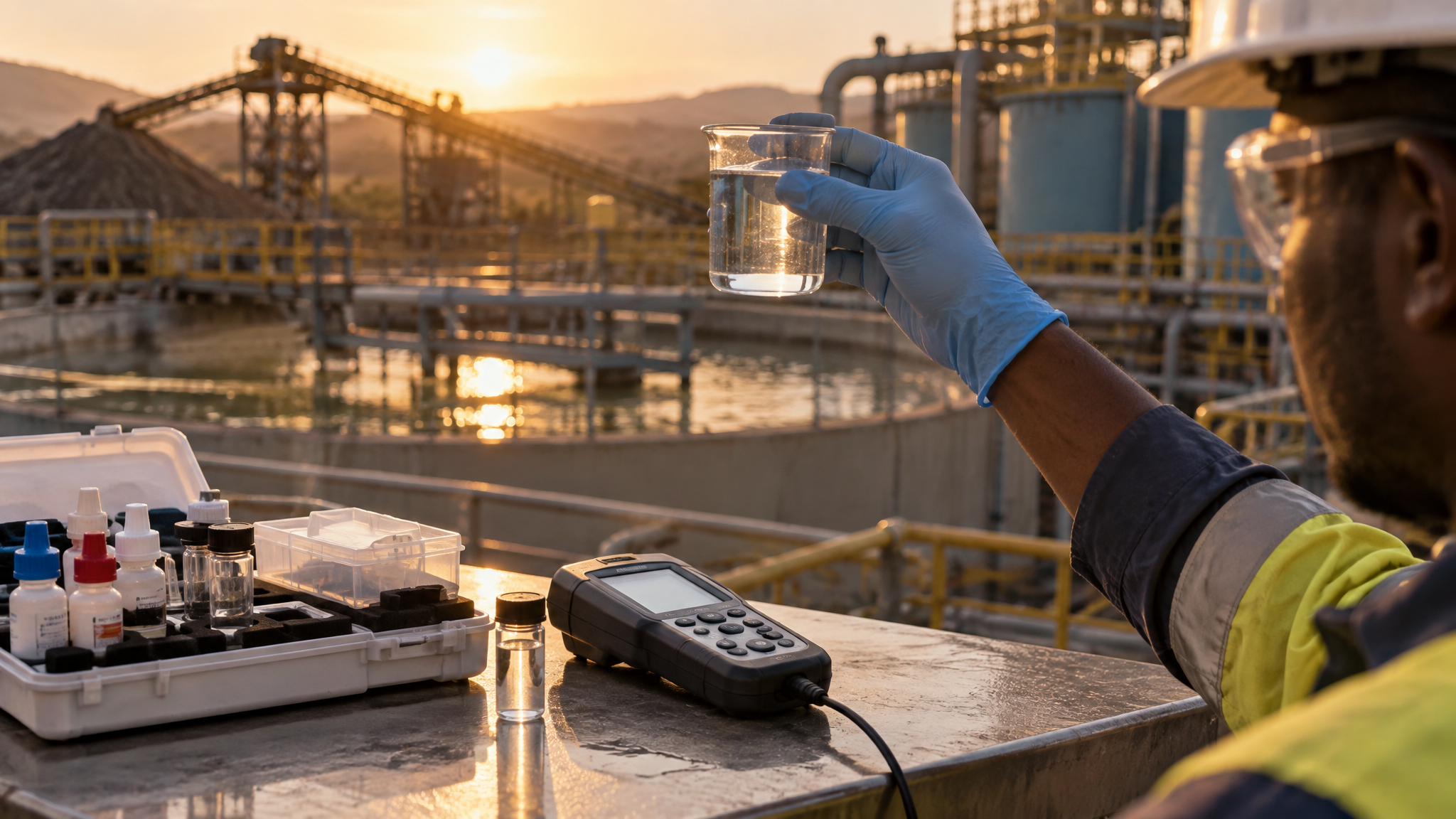
Testing Your Water: What to Measure
At minimum, test your process water for these parameters monthly, or whenever you change water sources:
| Parameter | Target for Elution | Test Method |
|---|---|---|
| TDS | Below 200 mg/L (below 50 for AARL) | TDS meter |
| Hardness (CaCO3) | Below 50 mg/L | Titration or test strips |
| pH | 7.0 to 8.0 | pH meter or strips |
| Chlorides | Below 100 mg/L | Titration |
| Dissolved Silica | Below 20 mg/L | Colorimetric test |
| Dissolved Organic Carbon | Below 5 mg/L | Laboratory analysis |
Keep a log of your water quality results. Seasonal changes, especially in surface water sources, can cause sudden shifts that affect your process without obvious warning.
Practical Water Treatment Options
For most small to medium operations, the following treatments cover the common issues:
- Water softener (ion exchange): Removes calcium and magnesium. Relatively low cost, effective for hardness.
- Reverse osmosis (RO): Removes everything: TDS, hardness, chlorides, silica, most organics. Higher capital cost but produces the cleanest water.
- Activated carbon filter: Removes organics and chlorine. Good as a polishing step after softening or RO.
- Deionisation (DI) resin: Removes all ions. Required for AARL systems. Can be expensive if TDS is very high (the resin exhausts quickly).
The right treatment depends on your water source, your elution system, and your budget. At Bulawayo Elutions, we can advise on water treatment based on what we see coming through our facility. Contact us to discuss your situation.
Frequently Asked Questions
Can I use tap water for gold elution?
It depends on your local tap water quality. In many parts of Zimbabwe, tap water has moderate TDS and hardness that is acceptable for ZADRA but may need treatment for AARL. Test it first.
How much does a water softener cost?
Small water softeners suitable for a batch elution operation cost a few hundred to a few thousand US dollars. The running cost is primarily the salt for regeneration. This is a small investment compared to the gold you lose from using hard water.
How does water quality affect carbon life?
Hard water and high-TDS water accelerate carbon fouling, which means more frequent acid washing and thermal regeneration. This shortens the useful life of your carbon. Clean water extends carbon life and reduces your carbon replacement costs. See our guide on extending carbon life.