
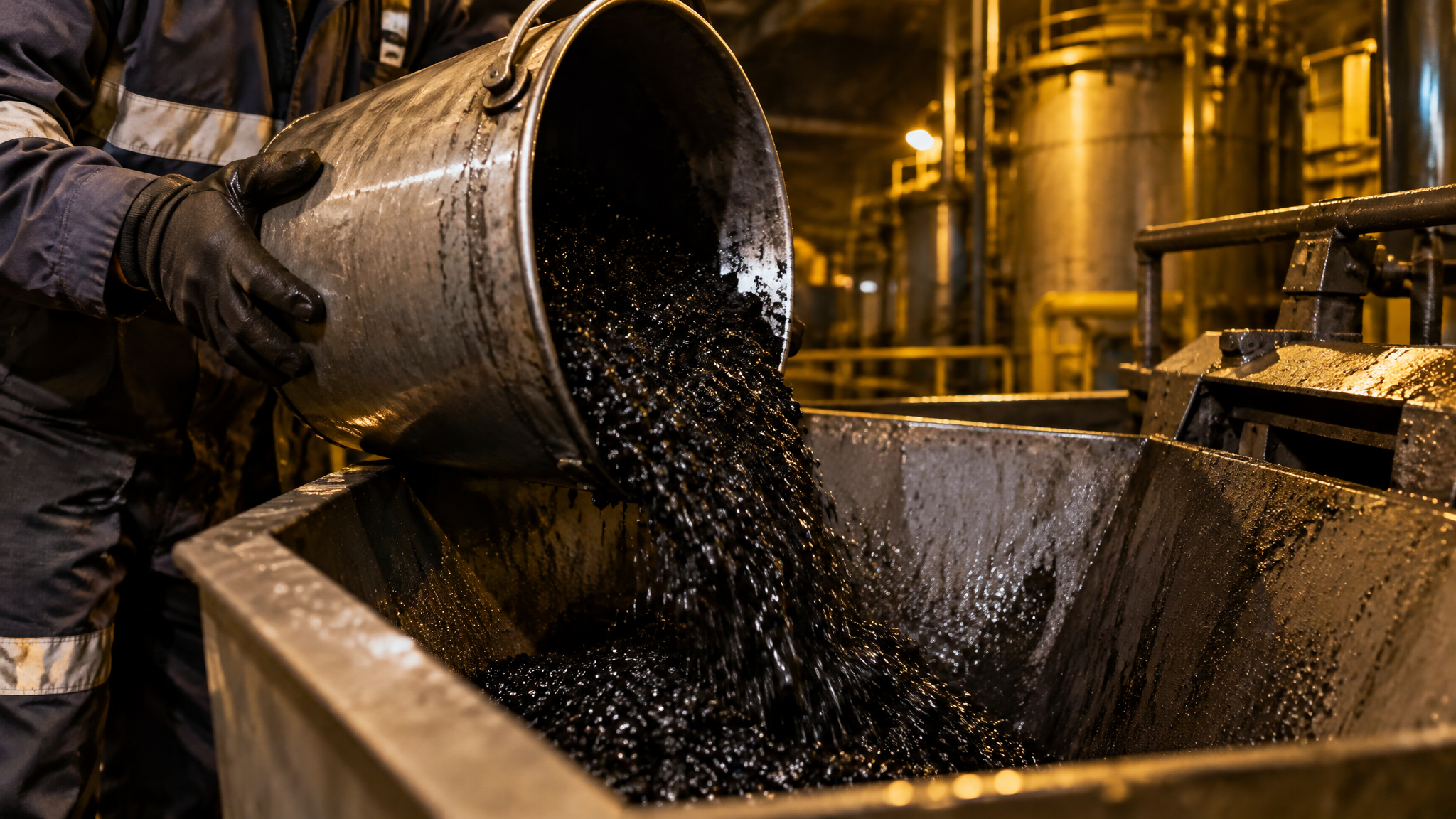
What Is Gold Elution?
Gold elution is the process of removing adsorbed gold from activated carbon using a hot chemical solution. In the gold mining industry, this is a critical step because gold does not arrive at a refinery still stuck on carbon granules. It needs to be stripped off, collected in solution, and then recovered as physical metal through electrowinning and smelting.
The word "elution" comes from chemistry, where it describes washing a substance from an adsorbent. In gold processing, the adsorbent is activated carbon and the substance being washed off is dissolved gold. The process reverses the adsorption that happened earlier in the CIP or CIL circuit.
If you are running any kind of gold recovery operation that uses carbon, elution is not optional. It is the step that converts your loaded carbon into money.
The Chemistry Behind Gold Elution
To understand elution, you need to understand what happened before it. In a CIP (carbon-in-pulp) or CIL (carbon-in-leach) circuit, dissolved gold in a cyanide solution is adsorbed onto activated carbon. The gold forms a complex with cyanide ions, and this complex is attracted to the carbon surface through a combination of electrostatic and chemical forces.
During elution, we reverse this process. A hot strip solution, typically containing sodium hydroxide (caustic soda) and sodium cyanide, is passed through the carbon. The high temperature (85 to 170 degrees Celsius depending on the system) weakens the bond between the gold-cyanide complex and the carbon surface. The caustic environment shifts the equilibrium, encouraging the gold complex to leave the carbon and enter the solution.
The result is a "pregnant" strip solution, rich in dissolved gold and silver. This solution moves to electrowinning cells where the gold is deposited onto steel wool cathodes as a metallic sludge.
The stripped carbon, now mostly free of gold, can be acid-washed and thermally regenerated for reuse. This is important because activated carbon is expensive, and getting multiple cycles out of each batch makes a real difference to operating costs.
Why Elution Is the Critical Stage
Mining operations invest enormous effort in ore extraction, crushing, milling, and leaching. All of that work concentrates gold onto carbon. But until that gold is physically stripped from the carbon, it has not been recovered. It is still a promise, not a product.
Elution is where that promise becomes real. It is also where things can go wrong if the process is not managed properly. Poor elution means gold left on carbon, which means money left on the table.
Some of the common issues that reduce elution efficiency include:
- Carbon fouling from organic compounds or mineral deposits
- Incorrect strip solution chemistry (too dilute, wrong temperature)
- Poor flow distribution through the carbon bed
- Degraded or over-used carbon with blocked pores
- Water quality issues affecting solution performance
Each of these problems has a direct impact on how much gold you recover from each batch of carbon. We cover these in detail in our article on the top 5 problems that reduce gold elution efficiency.
The Two Main Elution Systems
There are two widely used systems for gold elution: ZADRA and AARL (Anglo American Research Laboratories). Both achieve the same goal, but they differ in speed, equipment complexity, and operating conditions.
ZADRA is the simpler system. It operates at atmospheric pressure and circulates the strip solution through the carbon bed continuously. The gold deposits on electrowinning cathodes in-circuit during the stripping process. Cycle times are longer, typically 24 to 48 hours, but the equipment is straightforward and reliable.
AARL is faster and more efficient per cycle. It uses a pressurised vessel, higher temperatures (150 to 170 degrees C), and includes a pre-treatment acid wash step that removes inorganic foulants from the carbon before stripping. AARL cycles take 8 to 12 hours and typically achieve stripping efficiencies above 97%. Electrowinning is done as a separate step after stripping.
We have written a detailed comparison in our article on ZADRA vs AARL elution systems.
What Happens If Elution Is Done Poorly
Poor elution has three immediate consequences. First, gold remains on the carbon. If your stripping efficiency drops from 98% to 90%, that is 8% of your gold going back into the circuit on carbon that should have been clean. Over time, this adds up to significant losses.
Second, carbon that is not properly stripped accumulates gold over multiple cycles. This creates a security risk, as carbon with high residual gold loadings is valuable and needs careful handling. It also means your carbon is working less efficiently because the remaining gold occupies adsorption sites that should be available for fresh gold.
Third, poor elution often signals underlying problems with carbon condition. If your carbon is not stripping well, it is probably also not adsorbing well. The two go hand in hand. Addressing elution problems usually means addressing carbon management as a whole.
How Bulawayo Elutions Fits In
Not every mining operation has the capital or the expertise to run its own elution plant. Building and operating a ZADRA or AARL system requires specialised equipment, trained operators, and careful management of chemicals and temperatures. For many operations in Zimbabwe, especially smaller mines, it makes more sense to bring loaded carbon to a specialist processor.
That is what we do at Bulawayo Elutions. We operate a purpose-built facility on Awkwright Street in Bulawayo with 10 boilers, both ZADRA and AARL systems, and a full electrowinning and smelting setup. Our team has over 12 years of experience in gold elution.
When you bring carbon to us, we assess its condition, run the appropriate elution process, recover the gold through electrowinning and smelting, and give you a detailed reconciliation report. Every gram is accounted for.
Whether you are a small-scale miner with a few drums or a larger operation with regular batches, we can help. Get in touch to discuss your needs.
Frequently Asked Questions
How long does gold elution take?
It depends on the system. AARL elution typically takes 8 to 12 hours per cycle. ZADRA takes 24 to 48 hours. The actual time for your batch depends on carbon volume, gold loading, and carbon condition.
What recovery rate should I expect from elution?
A well-run elution cycle strips 95% to 99% of the gold from carbon. AARL systems at the higher end, ZADRA slightly lower. Carbon condition and solution chemistry are the main variables.
Can I reuse carbon after elution?
Yes. After stripping, carbon is typically acid-washed and then thermally regenerated in a kiln. Well-managed carbon can go through many elution cycles before it needs replacing. See our guide on extending carbon life.
What is the difference between elution and electrowinning?
Elution strips gold from carbon into a solution. Electrowinning recovers that gold from solution onto steel wool cathodes. They are sequential steps: elution first, then electrowinning.